
Writing flawed characters
who readers love & trust

There’s a lot of advice out there on writing strong characters. A few basics I’ve heard are:
Give your characters a “want” and a “need,” and know how those things differ
Give them a relatable backstory
Give them a unique voice
Make them capable and proactive (more on that later)
These tips all resonate with me. But one piece of character advice has been hard for me to adopt:
Give your characters flaws

I don’t just mean poor-table-manners flaws. I mean big, sometimes uncomfortable flaws. Personality traits that make us cringe a little.
A few years ago, when I wrote my first novel, I was afraid to give my protagonist juicy flaws. I was afraid to give her too much personality, period. I wanted her to be likeable—someone with whom no reader could find fault. Making her perfect and bland, I thought, would safeguard her against judgment. A simple, faultless heroine would be easy for readers to accept, and they would have a smooth path to enjoying the story.
I didn’t consider that the opposite is, most likely, true. It’s so much easier to love a well-rounded, real character than a “perfect,” two-dimensional person.
In the past few years, I’ve gotten more comfortable with the idea that we humans actually like imperfection. We love imperfect people, perhaps because we are all (shockingly) imperfect, ourselves.
Embracing imperfection in real life is an ongoing journey for me. But it has prompted me to also think about writing imperfect characters and how to make them sufficiently flawed. What are the right types and amount of flaws to give a character? Is there a recipe? Are there rules?
I’m learning my way through this topic. Below, I share a few questions I’m posing to myself and my attempts at answering them. I hope this is useful in thinking about your own messy characters.
Some character flaw basics
Q: Do we love flawed characters more than perfect ones?
Of course we do!
Q: Why?
Let’s admit it: perfection is kind of off-putting. Short of that, it’s boring.
We humans are flawed creatures. We usually know this about ourselves, and we like when other people have flaws, too. Not so we can judge them (at least, not only that), but so we can relate to them. It makes them endearing. For example, we don’t like to see the straight-A student also become homecoming queen and an all-star athlete; something about it feels false (or irritating, at least).

Instead, we love a character with a shadow side, a dark backstory, or even just a habit of misplacing their phone too often. We love these things because we can relate to them. And perhaps, on some level, seeing flaws in others gives us permission to accept our own.
Q: What counts as a “flaw”?
A lot of things. But to be compelling, a flaw should probably be something related to your character’s morality or personality, not just a surface-level quirk. For example, a compelling flaw might be, jumping quickly to anger. A character could go on many an interesting tale as they learn to tame that temper (or not). Thus, this flaw feels like good fodder for a story.
In contrast, flaws that are more surface level—let’s say, someone having constant bad breath—are probably not going to drive a story forward. They can still serve a purpose—for example, it adds a little color to a side character and can help us easily identify them (e.g., “then the guy with bad breath came back.”) But this kind of flaw probably isn’t going to be a foundation of our larger plot.
(Of course, now that I say this, it feels like a good writing challenge: “write a story in which the character’s bad breath is the compelling flaw that drives the story forward.” Hmm…)
Q: How do character flaws drive the plot?
Flaws give our characters room to grow. If our story starts off with a perfect protagonist, it will probably be a very short (and dare I say, dull) tale.
Character flaws help move the story forward. When characters are faced with decisions, their flaws influence how they respond. When a character’s response is shaped by one of their flaws—such as greed, insecurity, or a know-it-all attitude—we know they’re headed in the wrong direction. There will be a negative consequence for what they just did. So as readers, we peek through our fingers, watching in anticipation as the plot escalates.
Think of the horror movie classic: “let’s split up.” Maybe a character suggests this because they’ve got a bossy personality, or a compulsion to go into denial in stressful situations. As viewers, we can see so clearly that the character is doing something they shouldn’t. (Never go in the basement alone! How do you not know this?) But the character does it anyway, because their flaw is part of them, and it’s driving their decisions.
Is it agonizing to watch characters make poor choices based on their flaws? Sometimes, yes. But it certainly drives the plot forward.
Q: Is there such a thing as a character that’s TOO flawed?
I think so, yes. If a reader feels like they can’t trust a character, period, then the character might be too flawed.
Brandon Sanderson’s advice is helpful here: readers like characters who are “proactive, relatable, and capable.” Flaws make our characters relatable, sure, and we need them. But we also want characters to be capable in some way. Maybe they have a unique skill or excellent judgment that comes in handy throughout the story. When we see that a character is capable (even if they’re just capable of one, specific thing), we feel like we can trust them.
So, we need both flaws and capabilities. We relate to flawed characters, and we trust capable characters.
Q: Are there flaws that are TOO egregious to give our characters?
…possibly, yes. If a flaw is so big that it prevents a reader from trusting or relating to your character, it may be too much. But I think every writer is going to draw that line in a different place; I don’t think there are hard-and-fast rules about which flaws are “off limits.”
This would be an excellent writing challenge, wouldn’t it? To pick the most egregious character flaw you can imagine—something deplorable—and challenge yourself to write a character with that flaw, and write them in such a way that the reader still roots for them, on some level?
Lolita’s Humbert Humber is probably the classic example. His compelling voice makes him relatable—at least, relatable enough that millions and millions of readers have kept reading to the end.
So, one could argue that no flaw is too egregious or too taboo for your character. The trick, I think, is to make the character sufficiently relatable in other ways, such as giving them a compelling backstory or a strong voice.
Share your thoughts
What do you think makes for a compelling character flaw?
How do you make your characters feel relatable? Flawed?
I’d love to hear!
Writing update
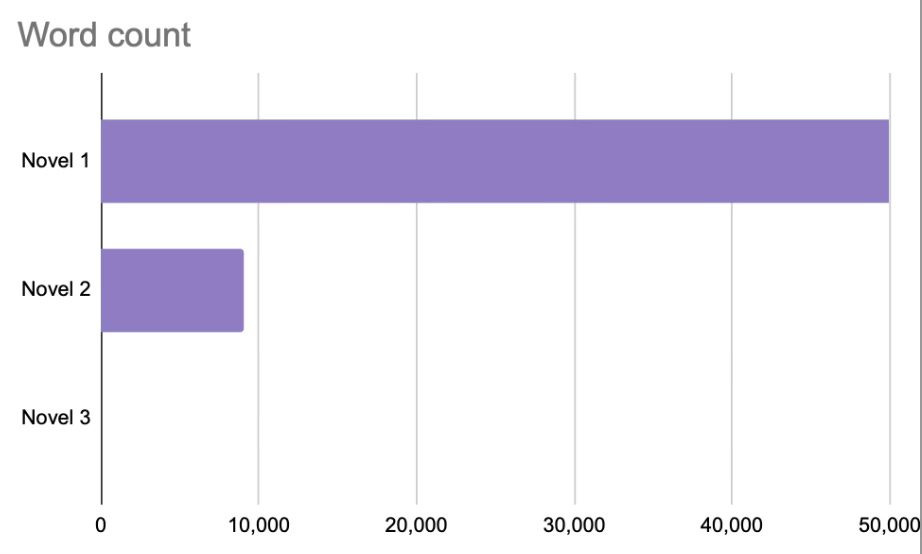
I’m 9,000 words into novel 2, finding a bit more of a groove after a slow couple of weeks. Recently, my fits-and-starts writing has left me feeling like I need to reacquaint myself with my heroine, hence this meditation on character flaws. Right now, the flaws I’m giving her feel a little scattershot, like a collection of personality quirks that aren’t super consistent from one scene to the next. I’m not too worried about this, though. I think testing out a range of character flaws in a first draft is part of how I discover the protagonist, and the story itself. I’m pretty confident I can go back during revision to find some consistency in her flaws and smooth over those rough edges.
Thank you for reading,
Olivia
I’ve struggled with this too, Olivia! And I have to wonder about my own psychology or social conditioning here (eek) …I also wonder if women are more hesitant to create big and messy bc it feels counter to how we’re taught to operate in the world? Or maybe it’s just a post about craft 😉 I really liked this line: “And perhaps, on some level, seeing flaws in others gives us permission to accept our own.”